
The Salar de Uyuni gets most of the attention, as do the mountains around La Paz, but Bolivia has plenty of stranger things going on too. Some of the best facts are the ones you probably wouldn’t think to look up before a trip.
I’ve picked out seven Bolivia facts interesting enough to remember, covering everything from miniature wishes and unusual food to a rather complicated capital city situation.
1. Bolivia Has 37 Official Languages
One of the first things that surprised me about Bolivia is just how linguistically diverse it is. Spanish is an official language, but Bolivia’s constitution also recognizes the languages of its Indigenous nations and peoples. Altogether that makes 37 official languages.
It’s More Than Just Spanish
The list includes widely spoken languages such as Quechua and Aymara alongside many smaller languages. Some are spoken by relatively small communities, which makes Bolivia’s language map considerably more complicated than you might expect from a country where Spanish is what most travelers hear first.
The language mix becomes much more noticeable outside the main tourist areas. What you hear can depend on the local community, with Spanish sitting alongside a range of Indigenous languages.
2. Sucre Is the Capital, But La Paz Is Where the Government Sits
La Paz is the answer you’ll usually get when someone asks for Bolivia’s capital. There’s just one small problem: technically, it isn’t.
So Which City Is the Capital?
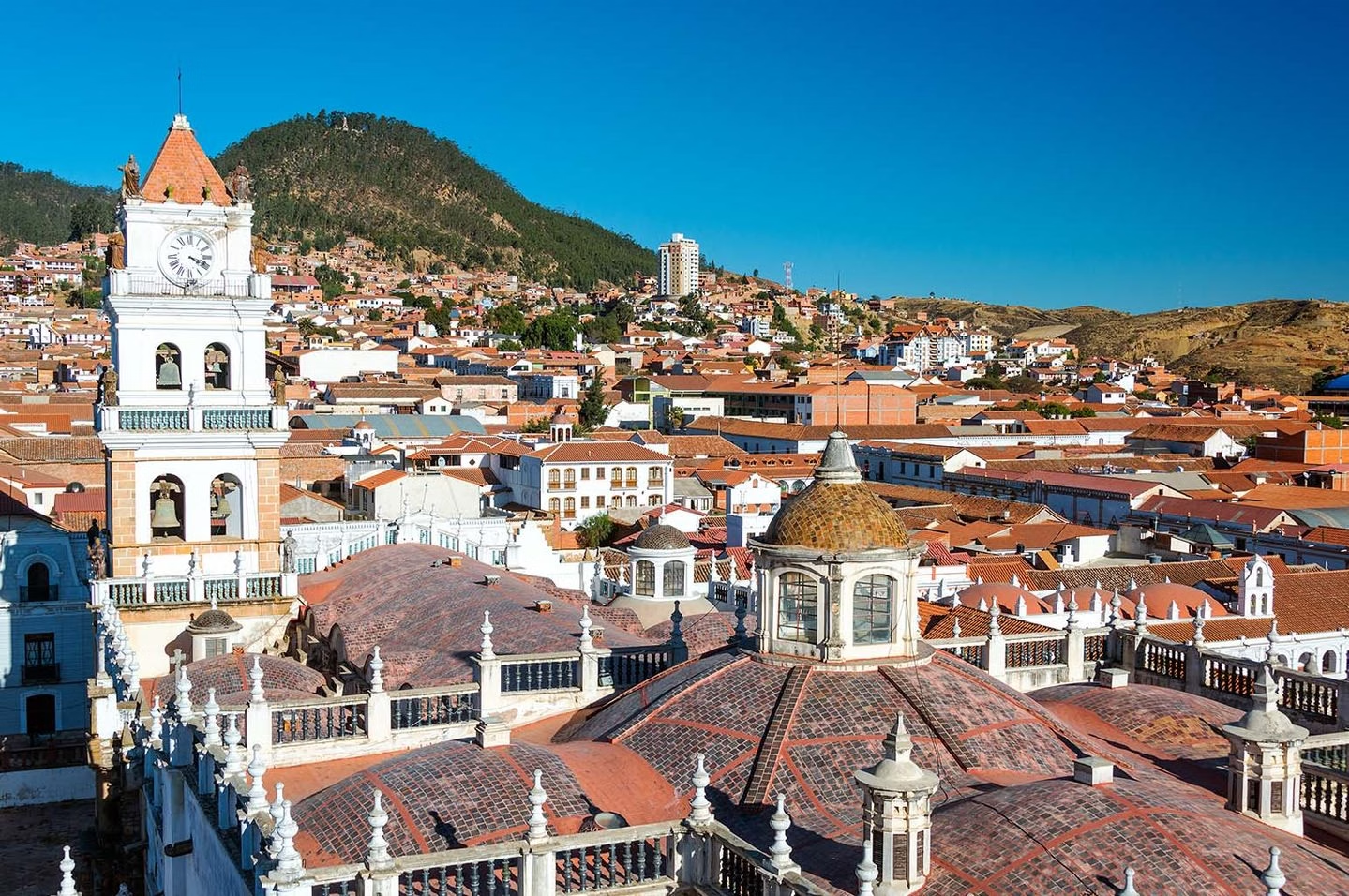
I didn’t realize at first that Sucre is officially Bolivia’s capital. La Paz is where the national government is based, which makes the whole thing a little confusing when you first come across it. Sucre has the official title, while La Paz is where most of the political business happens. So don’t be surprised if you hear both cities called the capital.
It’s another good reason to visit Sucre. It isn’t just a pretty colonial city that happens to be on the backpacker route. There’s a lot more history behind it than you might realize.
3. The Salar de Uyuni Can Turn into a Giant Mirror
The Salar de Uyuni is enormous, covering roughly 10,000 square kilometers in southwestern Bolivia, and it’s the largest salt flat in the world. Then the rain arrives and gives the place a completely different look.
The Famous Mirror Effect
When a thin layer of water sits on the salt, the whole thing can turn into a huge reflection of the sky. That’s where those famous photos come from, with the horizon seemingly disappearing and people looking like they’re walking across a giant mirror. The salt itself was left behind when ancient lakes dried up over time.
I think this is one of the best examples of Bolivia doing something slightly ridiculous with natural landscapes.
You turn up expecting salt. You get a mirror.
4. La Paz Has a Festival Where People Buy Tiny Versions of Their Wishes
The Alasita festival in La Paz is one of the more unusual traditions you’ll come across in Bolivia.
Beginning on 24 January, the celebrations involve people buying miniature objects that represent things they hope to have in real life. These can include homes, cars, money, food, or other symbols of prosperity. The tiny objects are part of the tradition associated with Ekeko and can be blessed during the celebrations. The ritual journeys of Alasita in La Paz were also added to UNESCO’s Intangible Cultural Heritage list in 2017.
Tiny Houses, Tiny Cars and Tiny Dreams
It’s actually a very straightforward idea. Want a new house? Buy a miniature one. Hoping for financial success? There’s a tiny version for that too.
I like traditions like this because they make something quite abstract feel very physical. You’re not just making a wish and forgetting about it. You’re walking around a market looking for a miniature version of the future you’d like.
The celebrations continue for weeks, with ritual activities involving Andean specialists and Catholic blessings forming part of the tradition.
5. Oruro Carnival Is Much More Than a Street Party
Oruro’s carnival is not exactly a small local celebration. UNESCO recognized the Carnival of Oruro as Intangible Cultural Heritage in 2008, and the festival brings together Indigenous traditions with elements of Christianity. Then you add the masks, costumes, music, and dancing, and things get rather spectacular.
The Numbers Are Slightly Ridiculous
UNESCO says more than 28,000 dancers and 10,000 musicians join the main procession, which covers around four kilometers. It’s a lot more than a colorful parade for tourists, with deep religious and historical roots behind the whole thing. Some older Uru traditions also survived by becoming part of Christian celebrations after Indigenous ceremonies were banned during the colonial period. The result is a festival where different layers of Bolivian history are still visible in the music, dances, and rituals.
6. The Wiphala Is an Official State Symbol
You’ll probably notice the colorful wiphala alongside Bolivia’s red, yellow, and green tricolor flag.
It isn’t simply a decorative Indigenous flag. Bolivia’s constitution specifically lists the wiphala among the symbols of the state, alongside the tricolor flag, the national coat of arms, the escarapela, and the flowers of Kantuta and Patujú.
You’ll See It Around the Country
I didn’t really pay much attention to the wiphala at first. It’s strongly connected to Indigenous peoples of the Andes and is an important symbol in Bolivia, but the national flag is obviously the one most travelers notice first. Once you know what you’re looking for, you start seeing the wiphala much more often.
It’s a good reminder that Bolivia’s national identity is more complicated than the usual travel brochure version of mountains, llamas, and salt flats.
7. A Salteña Is Basically a Juicy Hand Pie You Have to Learn to Eat
One of my favorite Bolivia food facts is the salteña. At first glance, it looks a bit like an empanada. Then you bite into it and discover there’s a lot more going on.
The Tricky Part Is the Filling
Salteñas are baked pastries with a juicy filling, usually made with things like meat, potatoes, egg and spices. They’re a traditional Bolivian food and one of the country’s better-known street foods.
The filling is deliberately juicy, which is brilliant when you’re eating it properly and slightly alarming when you’re trying to do so while walking down the street.
There’s also an interesting argument about where the salteña actually came from. One well-known story credits Juana Manuela Gorriti, who came from Salta in Argentina and later lived in Potosí, but historians have questioned that version and other evidence suggests the recipe may have a more complicated history.
Either way, it has become firmly associated with Bolivia. And yes, you need to be slightly careful with the first bite.
Why These Bolivia Facts Matter
The interesting thing about these facts is that they don’t really sit in separate boxes. The languages connect to Bolivia’s Indigenous cultures. The wiphala reflects that identity at a national level. Alasita and Oruro show how older beliefs and traditions have continued alongside Christianity. Even the salteña has a history that crosses modern borders and different cultural influences.
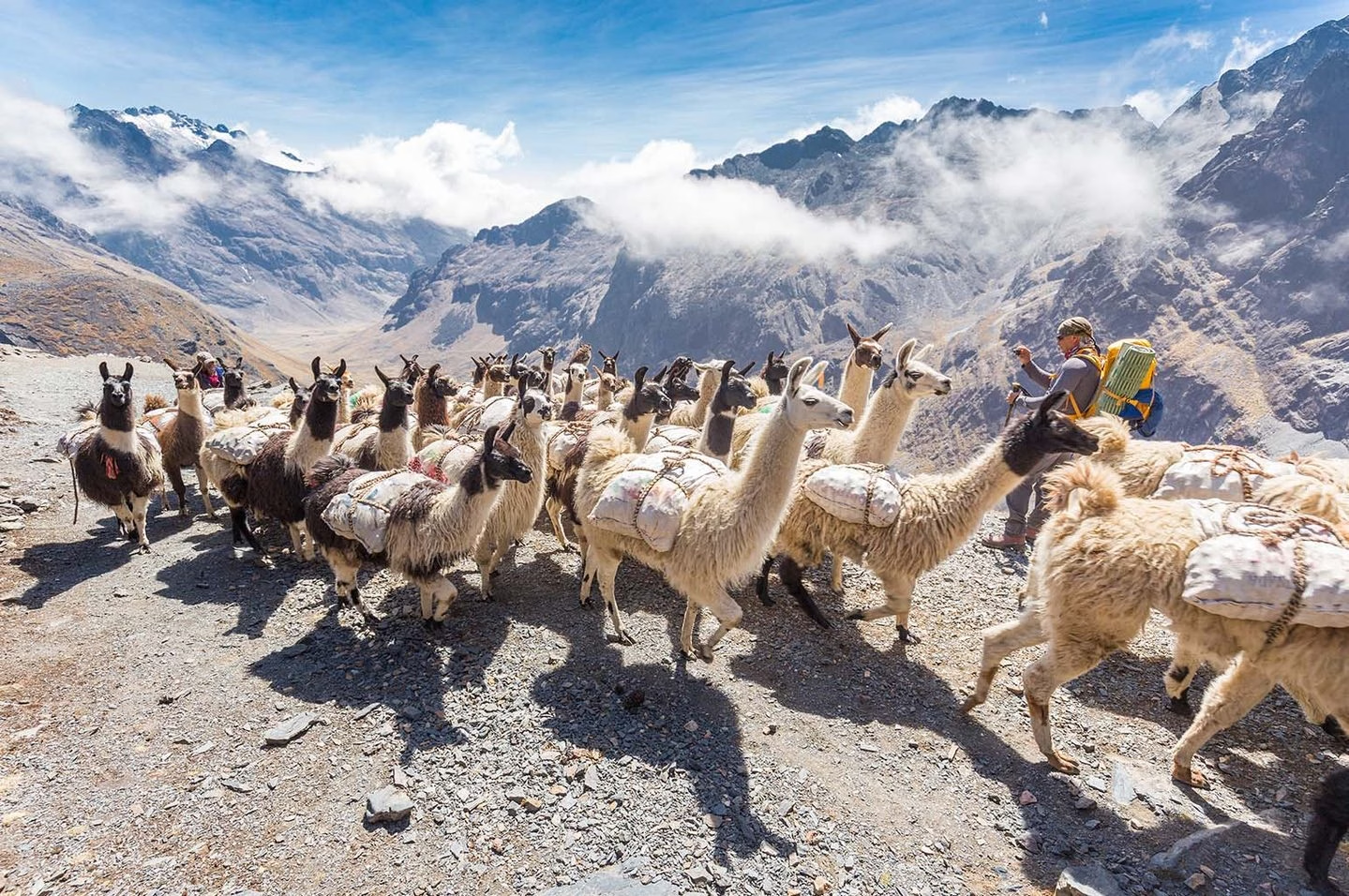
Then you have the geography, which is almost showing off. You can go from the high-altitude cities of the Andes to the Salar de Uyuni and then down towards greener regions like the Yungas. Bolivia is a country where the landscape, food, languages, and traditions can change quite dramatically without travelling particularly far by South American standards.
That’s probably why the stranger little details are often the ones I remember.
In Conclusion
There’s plenty of Bolivia information out there about the Salar de Uyuni, La Paz, and the usual attractions. Those places are famous for good reason. But the country’s more unusual details are just as interesting.
A country with 37 official languages, two cities with different capital roles, miniature wishes in La Paz, a UNESCO carnival in Oruro and a pastry that can surprise you with its filling is bound to have a few stories worth telling.
And honestly, that’s part of what makes travelling in Bolivia so enjoyable. You never quite know what strange little fact you’re going to come across next.
