


The Fundamentals of Garage Door Maintenance and Repair
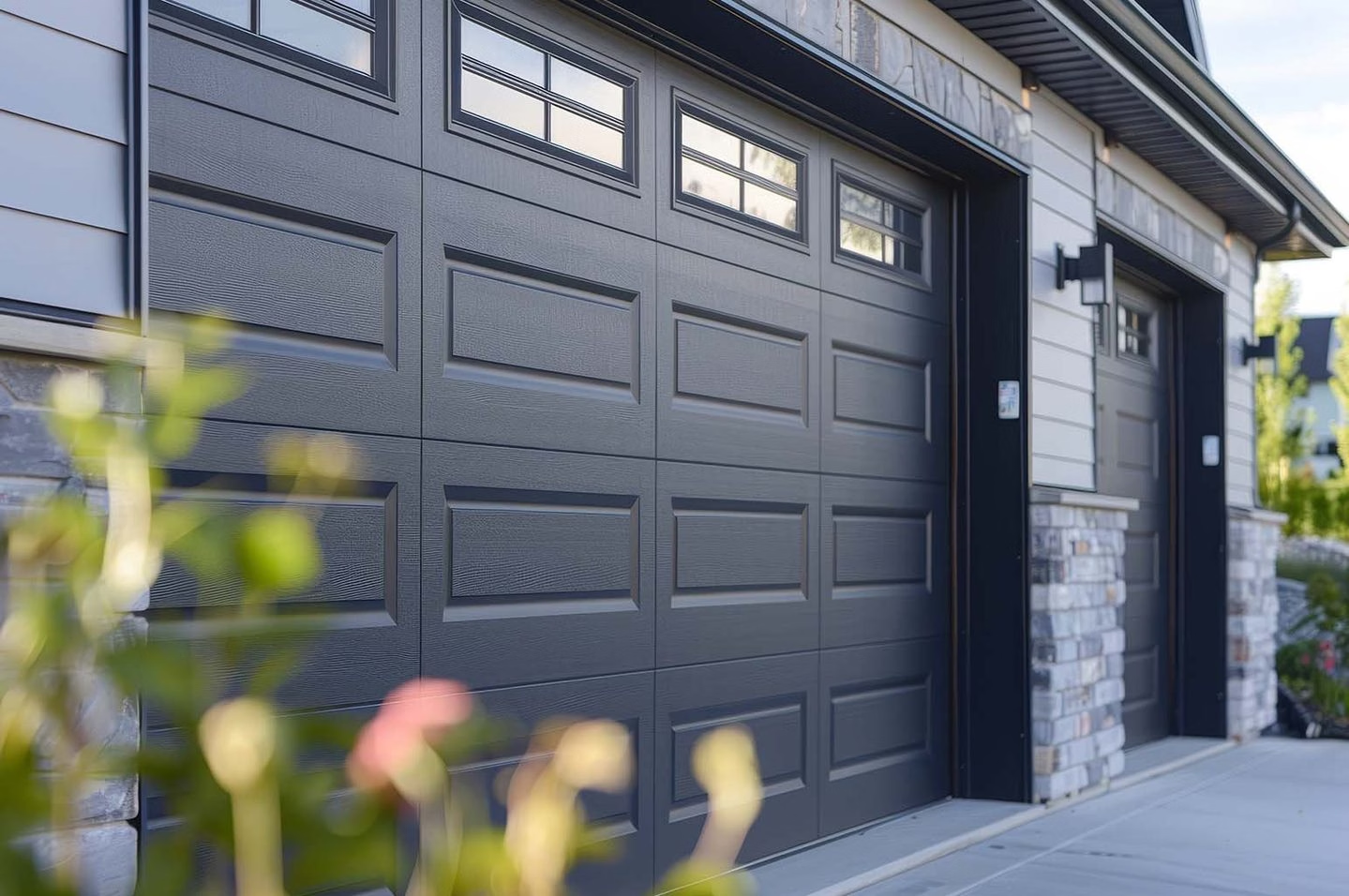
Our garage doors are more than just entry points; they are key to our home’s security, energy efficiency, and curb appeal. Yet, these essential systems often go unnoticed until a problem arises. Over time, constant use, weather exposure, and neglected moving parts can lead to significant wear and tear, creating safety hazards and reducing operational lifespan. Proper garage door maintenance and repair are crucial to prevent costly breakdowns, ensure smooth operation, and keep our homes safe and looking their best. In this guide, we’ll explore essential tips to care for your garage door system, whether it’s a classic traditional model or a charming carriage style, applicable to homeowners everywhere.

For expert garage door maintenance and repair services, contact us today.
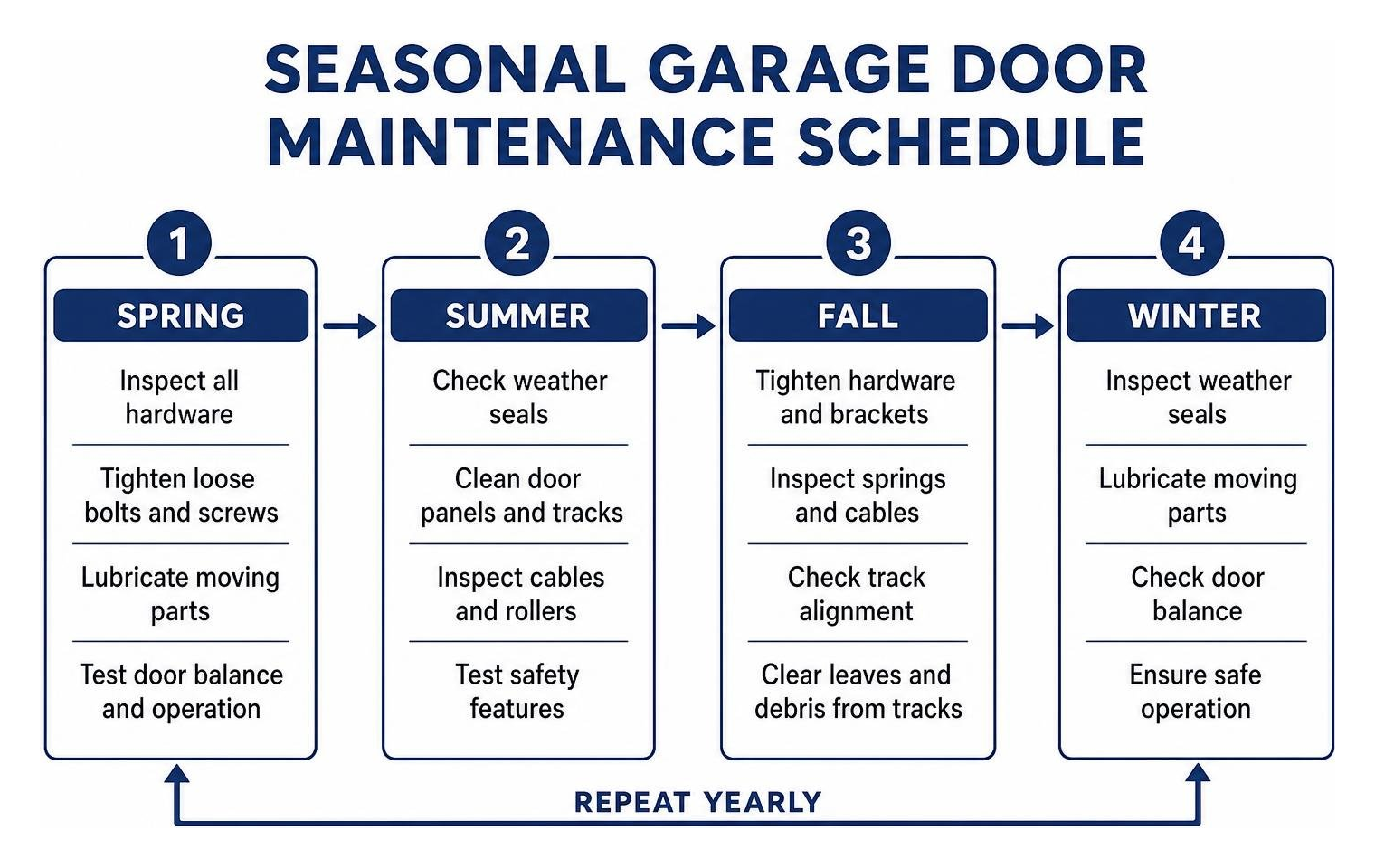
Regular inspection and preventative care are the cornerstones of a well-functioning garage door system. Just like any complex machinery, your garage door has numerous moving parts that require attention to maintain operational balance and prevent premature wear. Addressing minor issues proactively can significantly reduce noise, extend the life of your door, and avert more expensive repairs down the line.
Visual Inspection and Hardware Tightening
A thorough visual inspection should be your first step. Begin by looking at all mounting brackets, ensuring they are securely fastened to the garage wall or ceiling. Loose bolts can lead to instability and misalignment. Pay close attention to the hinges, particularly those connecting the door panels; hinge wear is common due to constant movement and can cause panels to sag. Examine the rollers for any signs of cracking or chipping, and check the cables for fraying or rust. Vibration fatigue can loosen hardware over time, so routinely tightening all nuts and bolts is a simple yet effective preventative measure. This attention to detail helps maintain the structural integrity and smooth operation of your garage door.
Another fundamental diagnostic procedure is the manual balance test. Disengage the automatic garage door opener by pulling the red emergency release cord while the door is fully closed. Manually lift the door halfway along its track and gently let go. If the counterbalance springs are properly calibrated, the door should remain suspended roughly three to four feet above the ground. If the door slams shut or snaps open, the spring tension is compromised and requires immediate professional calibration.
Track Alignment and Roller Lubrication
The tracks are critical for guiding your garage door smoothly. Inspect them for any bends, dents, or obstructions, and ensure they are clean. Debris removal, such as dirt, leaves, or even small pebbles, is essential to prevent rollers from snagging. For optimal performance, the tracks should be perfectly aligned; even a slight misalignment can cause the door to bind or operate unevenly. Check the plumb of the vertical track sections using a standard spirit level to ensure they sit completely vertical.
Once the tracks are clean and aligned, focus on the rollers. Whether you have nylon rollers or steel rollers, proper lubrication is vital. For nylon rollers, a silicone spray is often recommended, as it won’t attract dust and dirt. Steel rollers, on the other hand, benefit from white lithium grease, which provides a thicker, longer-lasting coating. Apply lubricant to the bearings and axles of the rollers, as well as to hinges and springs, but avoid lubricating the tracks themselves, as this can cause the rollers to slip. Consistent lubrication reduces friction, minimizes noise, and ensures your door glides effortlessly.
Routine Care Across Different Garage Door Styles
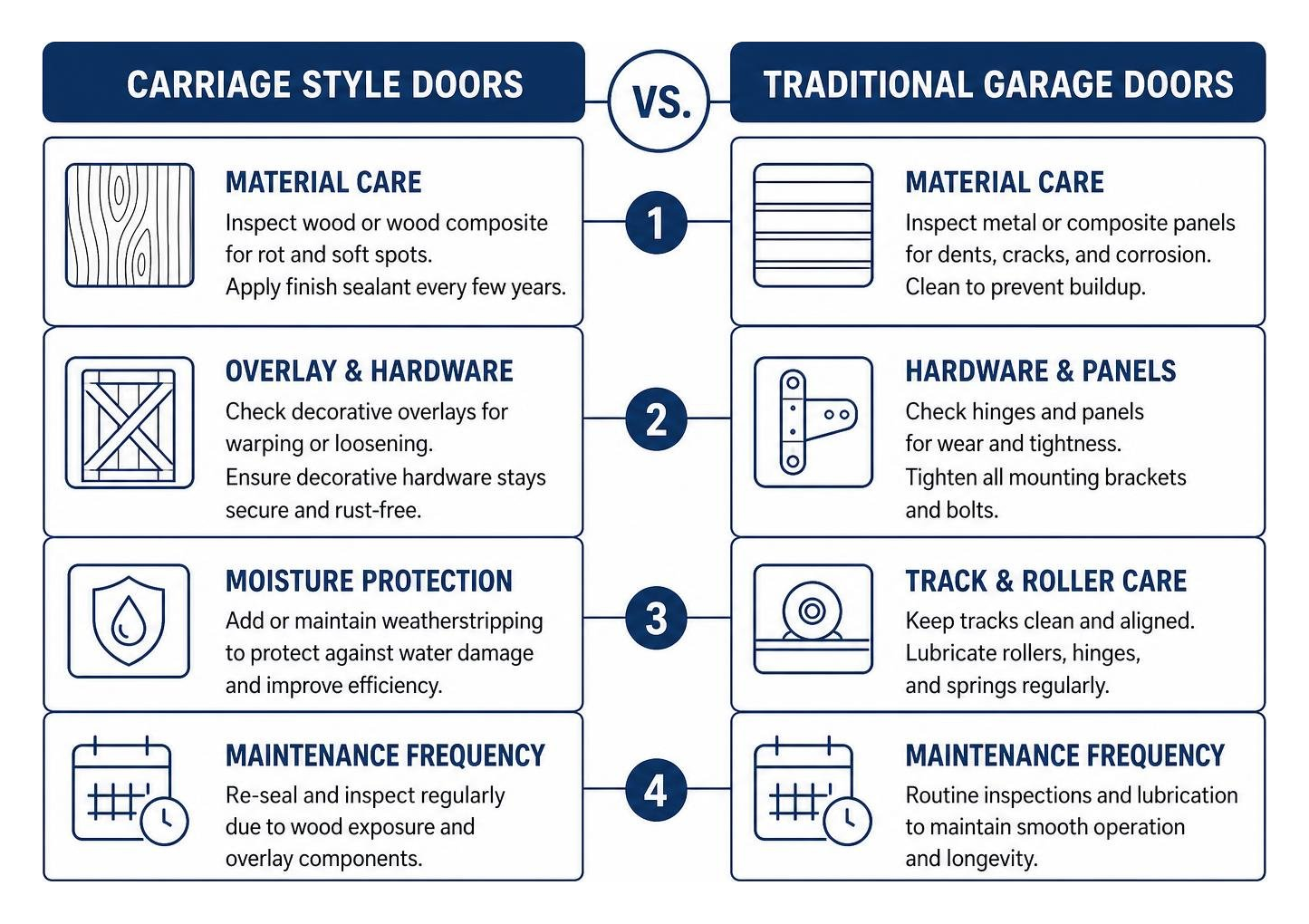
While the core principles of garage door maintenance apply universally, the specific needs can vary significantly between carriage style and traditional garage doors. These differences largely stem from material durability, how they are exposed to weather, and the unique aesthetic preservation requirements of each style.

Best Practices for Garage Door Maintenance and Repair on Wood and Carriage Designs
Carriage-style garage doors often evoke a sense of timeless charm, frequently featuring wood or wood composite materials. While beautiful, these materials demand specific care to maintain their integrity and appearance. Wood rot is a primary concern, especially in humid climates or areas with significant rainfall. Regular inspections for soft spots or discoloration are crucial. To combat moisture ingress, finish sealing should be applied periodically, typically every few years, depending on the product and local weather conditions. This involves cleaning, sanding, and then applying a fresh coat of sealant, paint, or stain.
The distinctive overlay inspection is also vital for carriage doors. These decorative elements, often made of wood, can be susceptible to warping or loosening. Ensure all decorative hardware, such as handles and hinges (even if purely aesthetic), remains securely attached and free from rust. Moisture protection is paramount; consider adding weatherstripping around the door’s perimeter to create a tighter seal against the elements, reducing the risk of water damage and improving energy efficiency. Pay special attention to bottom astragal seals, which prevent standing water from pooling beneath the door base. With proper care, a carriage house-style garage door can last 20 to 30 years, returning significant value.
Maintaining Steel and Aluminum Traditional Doors
Traditional garage doors, often made from steel or aluminum, are known for their durability and lower maintenance requirements compared to their wooden counterparts. However, they are not entirely maintenance-free. Panel cleaning should be done regularly with a mild detergent and water to remove dirt, grime, and environmental buildup. While steel and aluminum are robust, they can still dent or scratch, so care should be taken to prevent impact damage.
Rust inhibitor treatments can be beneficial, particularly for steel doors in coastal or high-humidity regions, to prevent corrosion. In multi-layer insulated steel doors, routinely examine the thermal breaks between panel sections to verify that the core polyurethane or polystyrene insulation remains dry and intact. Pay attention to the weatherstripping along the bottom and sides of the door. This material can degrade over time, becoming brittle or cracked, leading to drafts and reduced insulation. Regular seal replacement ensures optimal energy efficiency and protection from pests and elements. These doors generally require less frequent attention than wood but benefit greatly from consistent, albeit simpler, care routines.
Knowing When to Schedule Professional Service
While many maintenance tasks can be handled by homeowners, certain aspects of garage door maintenance and repair are best left to professionals. Attempting to fix complex mechanisms or address significant component failure without proper training and tools can pose serious safety risks. When you encounter issues beyond basic lubrication or hardware tightening, it’s time to call in the experts. For insights into choosing the right door type and ensuring its longevity, considering advice on garage door maintenance and repair can be invaluable.
Handling High-Tension Springs and Cables
Perhaps the most critical component requiring professional attention is the garage door spring system. Whether your door uses torsion springs (mounted horizontally above the door opening) or extension springs (running along the horizontal tracks), these components are under extreme tension. They are responsible for counterbalancing the immense weight of the garage door, allowing it to open and close smoothly.
Attempting to adjust or replace these springs yourself is incredibly dangerous. A snapping risk is very real, and a broken spring can cause severe injury or even death. Professional replacement ensures the correct spring type is installed, properly tensioned, and safely secured. Garage door lift cables, which work in tandem with torsion springs, are also wound under extreme pressure and should never be unfastened by untrained individuals. Garage door replacements can return up to 95% of their cost in added resale value, making professional repairs a worthwhile investment in safety and property value.
Troubleshooting Motor and Sensor Failures
Modern garage door openers are sophisticated systems that integrate motors, gears, logic boards, and safety features like photoelectric sensors. If your door isn’t opening or closing properly, or if it reverses unexpectedly, the issue might lie with these components. Photoelectric sensors, located near the bottom of the door tracks, are designed to detect obstructions; if they are misaligned, dirty, or damaged, the door’s safety reverse mechanism may not function correctly. Regularly test your auto-reverse feature by placing an object in the door’s path. If it doesn’t reverse, immediate professional attention is needed.
Issues with the opener’s motor, internal nylon drive gears, or logic boards are complex and typically require specialized diagnostic tools and expertise. While you might check the remote’s batteries or the power supply, anything more intricate should be handled by an experienced technician to avoid further damage or safety hazards. For comprehensive support with your garage door system, including expert garage door repair, we recommend consulting specialists who understand the intricacies of both traditional and modern carriage-style doors.
Frequently Asked Questions About Garage Door Care
How often should garage door maintenance and repair be performed?
For optimal performance and longevity, we recommend biannual checks for your garage door system. This includes inspecting all hardware, lubricating moving parts, and testing safety features. Spring testing should be part of these routine checks. Seasonal changes, particularly the transition from hot summers to cold winters, can impact components, making proactive tune-ups essential to address any issues before they escalate. Consistent maintenance can prevent unexpected breakdowns, reduce motor strain, and extend the overall life of your garage door.
What lubricant is best for garage door tracks and rollers?
For rollers, hinges, and springs, a silicone lubricant or white lithium grease is generally recommended. Silicone spray is excellent for nylon rollers and general metal-on-metal contact points, as it doesn’t attract dust. White lithium grease provides a heavier, more durable coating, ideal for steel rollers and high-friction areas. It’s crucial to avoid using WD-40, as it’s a solvent degreaser and can actually remove existing lubrication, leading to increased friction and dust accumulation. Never lubricate the tracks themselves, as this can cause rollers to slip and the door to malfunction.
Can damaged garage door panels be replaced individually?
In many cases, yes, a single panel can be replaced, especially for traditional sectional garage doors. This is a cost-effective solution if the rest of the door is in good condition. However, several factors determine feasibility, including the availability of a matching panel from the manufacturer, ensuring structural integrity isn’t compromised, and achieving an exact color match. For older doors or custom carriage-style doors, finding an identical panel might be challenging, and a full door replacement could be a more practical or aesthetically pleasing option.
In Conclusion
Our garage door systems are integral to our daily lives, offering security, convenience, and contributing significantly to our home’s curb appeal. By committing to routine upkeep, we can ensure their smooth, reliable operation for years to come. This proactive approach not only leads to long-term savings by preventing costly repairs but also enhances family safety and bolsters property security. Whether you own a classic traditional door or a charming carriage style, understanding its specific maintenance needs and knowing when to call in the professionals is key. Invest in your garage door’s health, and it will continue to serve your home faithfully.

